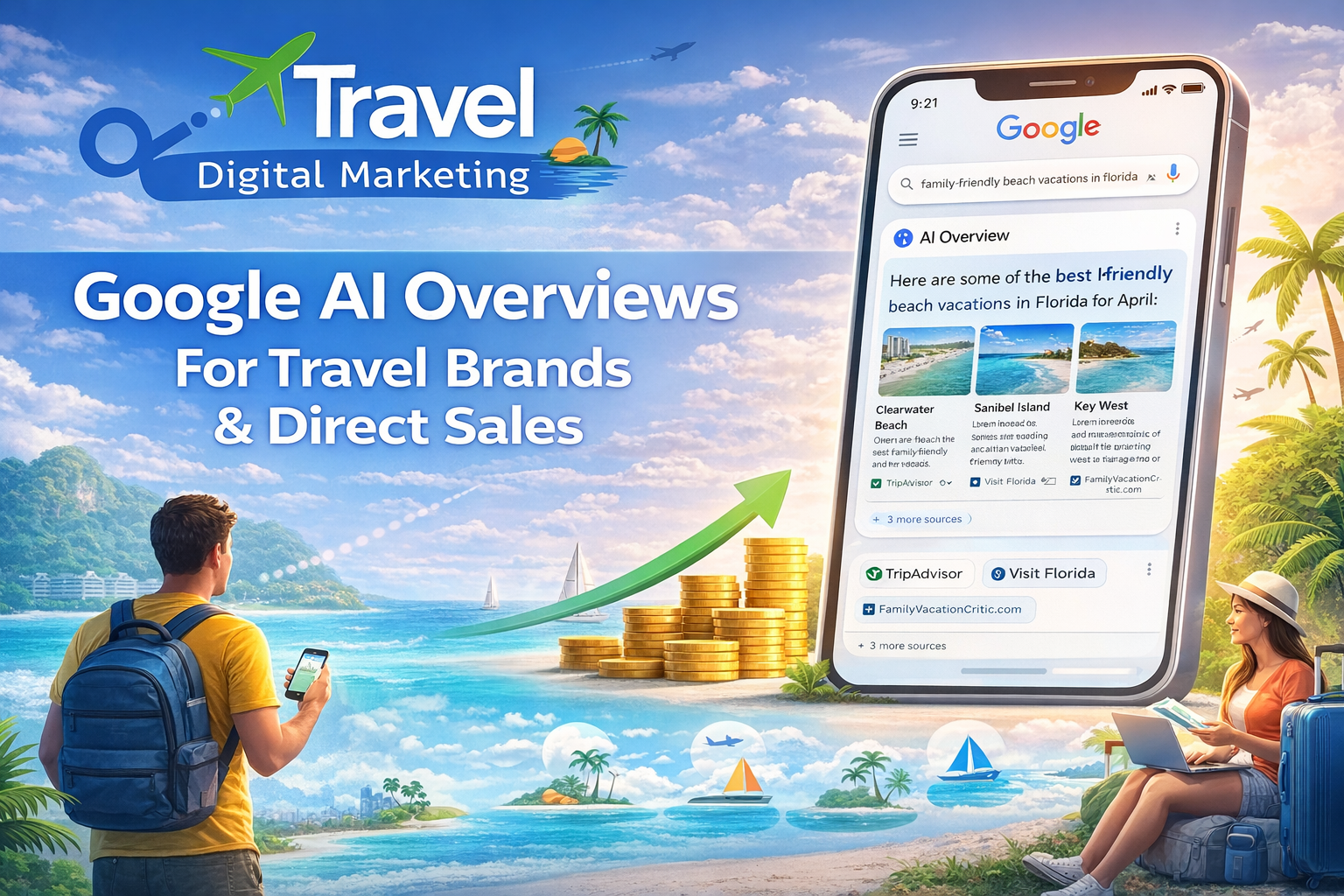
Google now answers many travel questions inside the results page. AI Overviews sit near the top and cite a short list of sources.
Click volume is softer on many queries. Pew Research Center found that users click links less often when an AI summary appears, so each visit has to work harder for revenue.
Why Google AI Overviews Shift Travel Search Economics
Travel search sits close to purchase. AI summaries compress early research and can reduce click-through rates, based on multiple studies and industry reporting.
Key commercial effects show up in board packs.
Less Room For Mid-Funnel Persuasion
Many travellers start with broad questions, then move to dates, inclusions, and price. Shorter research paths mean visitors who still click often arrive with fixed expectations and less patience.
Higher Value For Branded Demand
Brand queries still drive action. A name that appears inside summaries can lift recall, then branded searches follow. Budget conversations shift toward share of voice for brand plus product pages.
More Weight On Owned Conversion
Direct bookings protect margin. Lower click volume can still support growth when landing pages answer questions fast and reduce checkout friction.
How Google Surfaces Sources In AI Overviews
Google describes AI features as part of Search and notes that these experiences can include content from the web, with links to cited pages.
Several cues shape citation odds.
Clear Answers That Match The Query
Travel queries often include constraints such as budget, season, family needs, accessibility, or pickup location. Pages that state facts early and keep them consistent give the model strong material.
Entity Signals That Provide Context
Tour brands, destinations, attractions, and departure points form a connected set. Consistent naming across key pages helps Google place a business in context.
Formatting That Supports Quick Extraction
Many summaries show short sections and bullets. That pattern rewards pages that present facts in a tight structure, with headings that mirror traveller questions.
Content That Earns Citations And Drives Bookings
A citation does not guarantee a click. The aim is a source link that signals authority and a page that converts that visit into a booking or a qualified enquiry.
Core page types follow.
Build Product Pages Around Traveller Decisions
Tour pages often lead with emotion. Summary features pull facts and constraints. A strong tour page gives both, with key details near the top.
Use a consistent set of sections across every product page.
- Duration, start times, pickup points, and physical level
- Inclusions, exclusions, and any add-ons
- Weather policy, cancellation terms, and group size limits
- Accessibility notes and age guidance
- Proof points such as review volume and safety credentials
Publish Comparison Pages That Reduce Choice Stress
Travellers ask questions that start with which. They want the best month, the right tour length, or the right base for a family trip. Comparison pages can earn citations, then send users into tours that match the recommendation.
One decision lens per page works well, such as seasonality, budget band, or traveller type.
Create Proof Pages That Support Trust
Trust signals matter when the results page does the explaining. A page that documents guide training, permits, insurance, and safety standards can serve as a citation source for trust queries.
Table Of Page Formats And Citation Potential
| Page Format | Common Query Style | What AI Can Cite | Direct Booking Hook |
| Tour product page | price, duration, inclusions | key facts and policies | clear CTA and availability |
| Seasonal guide | best time, weather, crowds | month-by-month notes | recommended tours by season |
| Area comparison | where to stay, which region | transport and suitability | itinerary with links |
| Safety and trust page | licensed, insured, safe | credentials and process | group enquiry form |
| FAQ hub | can I, what if, how | short answers | links to relevant tours |
Technical Signals That Support Citation Quality
Content carries the message. Technical foundations help Google interpret it and help travellers complete purchase with confidence.
Technical priorities include the items below.
Use Structured Data With Care
Schema can clarify products, reviews, and business details. Google guidance on AI features still sits on top of core Search systems.
Accuracy comes first. Mark up only what appears on the page and keep values current.
Prioritise Performance On Revenue Pages
Each click has more weight. Fast load times and stable layouts support completion on availability, checkout, and confirmation pages.
Keep Facts Consistent Across Templates
A traveller might see your brand cited, then land on a page that shows different prices or inclusions. That mismatch breaks trust. Template governance and content reviews reduce that risk.
Measurement That Connects AI Visibility With Revenue
Search Console does not offer a clean AI Overview filter, and impressions can blend with classic results. Reporting rules can treat a URL as a single impression when it appears in more than one placement.
Measurement steps that support leadership reporting come next.
Track Query Groups And Page Clusters
Group queries by intent, then track impressions and clicks per group to spot shifts. Content hubs often map to destination, tour type, and season.
Tie Booking Steps To Landing Pages
Conversion tracking should map to each step. A report that shows landing page, enquiry start, payment start, and completion tells a clear story.
Run SERP Spot Checks For Priority Terms
Pick a shortlist of terms that drive revenue. Periodic checks can record cited sources, then guide updates and internal links.
Executive Checklist For The Next 90 Days
Change will continue. A steady rhythm helps a travel business stay visible and protect margin.
Next actions include the following items.
Choose Ten Queries That Define Revenue
Select a mix of high-intent product terms and high-volume planning terms. Assign owners for content fixes and technical work.
Refresh Facts On Product Pages
Update prices, inclusions, and seasonal notes. Review cancellation terms and safety information.
Build A Monthly Reporting Pack
Include these items.
- Query group impressions and clicks
- Conversion rate by landing page
- Revenue by channel with direct bookings highlighted
A travel brand that earns citations gains more than visibility. The source link supports trust, and the landing page turns that trust into bookings.