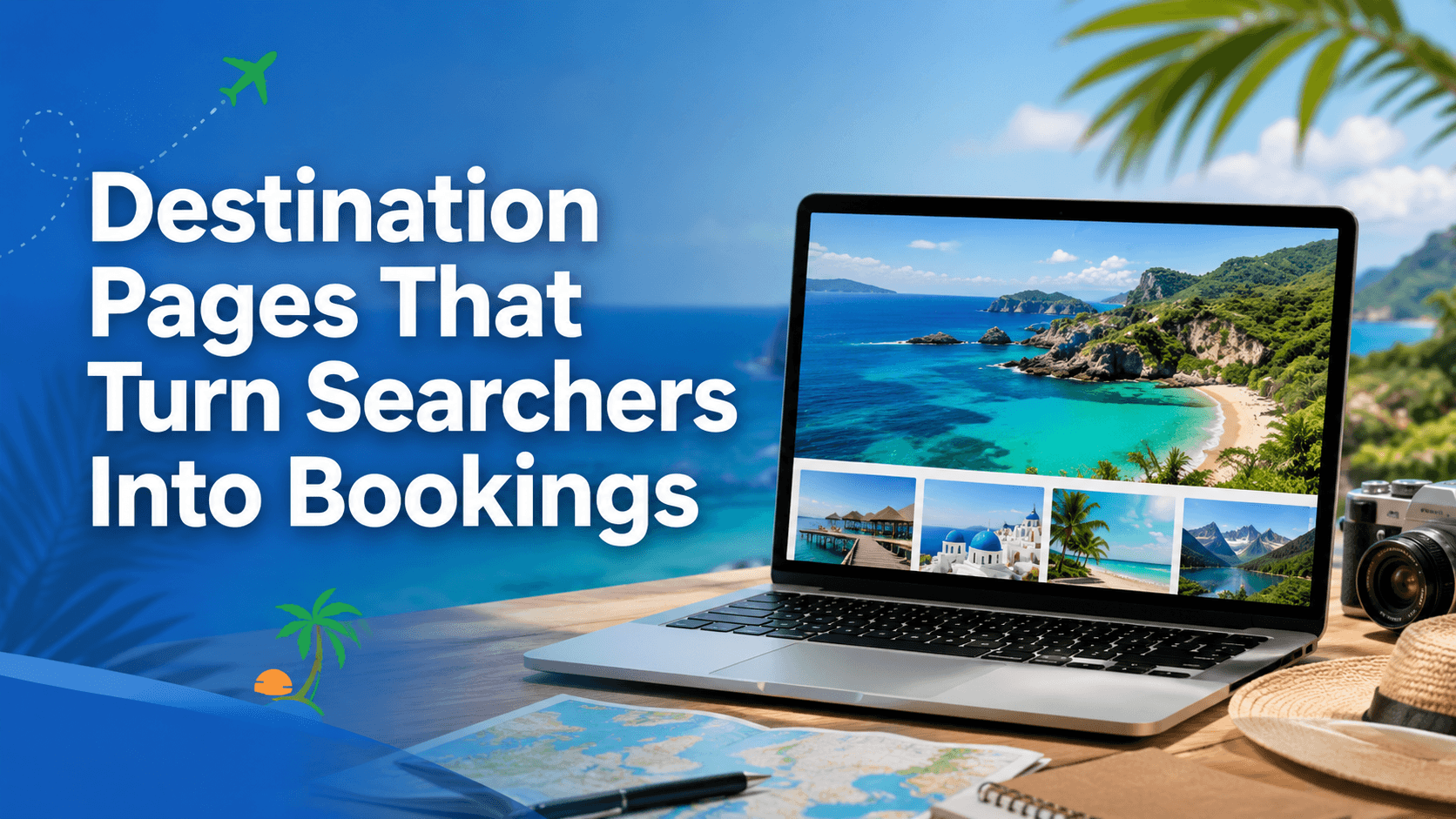
Destination pages can be some of the most valuable pages on a travel or tour website. When someone searches for a place, activity, tour route, or vacation idea, they are already picturing a trip. A strong destination page helps them move from curiosity to confidence.
The page should do more than describe scenery. It should answer practical questions, show the value of the experience, build trust, and make booking feel easy. For travel agencies, tour operators, guides, retreat planners, and excursion companies, destination pages can become a steady source of qualified inquiries.
The goal is simple. Give travelers the information they need at the moment they are already interested.
Why Destination Pages Matter For Travel SEO
Travelers often begin with location-based searches. They may search for family trips in Costa Rica, guided tours in Italy, wine tours in Napa, adventure travel in Utah, or private tours in New York City.
A destination page helps your business show up for those searches while giving visitors a clear path toward the right trip. This is where SEO for travel and tour operators matters. A page should match real traveler intent, use clear structure, answer common questions, and connect naturally to tours, packages, guides, and booking steps.
Strong destination pages also help your site build topical depth. Instead of having one general tours page, your site can explain each destination with the detail travelers need before they choose.
Start With Search Intent
Before writing a destination page, think about what the traveler is trying to learn. A search for “best tours in Sedona” is different from a search for “Sedona weekend itinerary” or “private hiking guide in Sedona.”
Search intent should guide the page structure.
| Search Intent | What The Traveler Needs | Page Content To Include |
|---|---|---|
| Researching A Destination | General trip ideas and local appeal | Overview, highlights, seasonality, photos |
| Comparing Tours | Reasons to choose one experience | Tour types, inclusions, difficulty, timing |
| Planning A Trip | Practical details | Itinerary notes, travel time, packing tips |
| Ready To Book | Confidence and next steps | CTA, availability, reviews, FAQs |
When the page matches the visitor’s mindset, the content feels useful instead of generic.
Write A Strong Destination Overview
The opening section should quickly explain why the destination is worth visiting and what kind of traveler it serves. Keep it specific.
A helpful overview might mention:
- Main attractions
- Trip style
- Ideal traveler type
- Best season or timing
- Popular activities
- Local experience
- Travel pace
- What makes your offer valuable
Avoid empty travel language that could describe any place. A destination page should feel grounded in that location. Mention real landmarks, neighborhoods, routes, activities, climate notes, cultural details, or travel concerns when relevant.
Connect The Destination To Your Offers
A destination page should not leave visitors wondering what you actually provide. After the overview, connect the destination to your tours, travel packages, planning services, or guided experiences.
For example, a tour operator might include sections for:
- Private tours
- Group tours
- Multi-day packages
- Day trips
- Custom trip planning
- Family-friendly activities
- Luxury experiences
- Seasonal travel packages
This also supports lead quality. When the page explains the kind of traveler and trip you serve, inquiries become more focused. For deeper strategy, intent-focused SEO can help destination pages attract people who are closer to taking action.
Add Details That Help Travelers Decide
Travelers need enough information to picture the trip. They want to know what the experience feels like, how long it takes, what is included, and what they should expect.
Useful Details For Destination Pages
- Best time to visit
- Typical trip length
- Popular landmarks or stops
- Activity level
- Transportation notes
- Group size details
- What is included
- What is not included
- Family, couple, solo, or group fit
- Weather considerations
- Packing notes
- Accessibility notes
- Cancellation or booking expectations
These details reduce uncertainty. They also help visitors decide if the trip matches their comfort level, budget, schedule, and travel style.
Use Photos And Visuals With Purpose
Travel is visual. Strong images can help a visitor feel the experience before they book. Destination pages should include real, relevant visuals whenever possible.
Good visuals may include:
- Destination landscapes
- Tour moments
- Local food or culture
- Guides with travelers
- Lodging or transport details
- Map-style route visuals
- Short video clips
- Seasonal photos
This is also part of strong web design. The page should load quickly, look polished on mobile, and guide the visitor through the story without feeling cluttered.
Build Trust Into The Page
Travelers are often spending meaningful time and money. They need confidence before they send an inquiry or book.
Trust signals can include:
- Reviews from past travelers
- Guide credentials
- Years of experience
- Local knowledge
- Safety notes
- Clear pricing guidance
- Real photos
- Helpful FAQs
- Media mentions
- Refund or cancellation details
These elements should feel natural within the page. A review near a tour section, a guide note near an itinerary section, or a safety note near an adventure activity can support the reader at the right moment.
Create Clear Calls To Action
A destination page should always guide the visitor toward a next step. That action may be booking a tour, requesting a quote, planning a custom itinerary, joining a call, or checking availability.
Use clear CTA language:
- Plan Your Trip
- Request A Custom Itinerary
- Check Tour Availability
- Book A Guided Tour
- Speak With A Travel Planner
- Start Planning This Destination
Place CTAs after major sections, not only at the very bottom. A ready traveler should never have to hunt for the next step.
Support Destination Pages With Marketing Channels
Destination pages can work across several marketing channels. They are not limited to organic search.
Paid campaigns can send high-intent visitors directly to a focused destination page instead of a general homepage. This makes paid ads more useful because the landing page matches the traveler’s interest.
Social posts can also point people to destination pages. A reel, carousel, or traveler story can spark interest, while social media marketing sends visitors to a page with full trip details.
Email can bring travelers back when they are still deciding. A campaign featuring seasonal trips, limited spots, or new itinerary ideas can link to a destination page through email marketing.
H4 Destination Page Mistakes To Avoid
Writing Thin Location Copy
A short page with a few broad sentences will not help much. Travelers need useful details.
Hiding The Booking Step
The page should make the next action clear from the start.
Using The Same Copy Across Locations
Each destination needs its own details, examples, and traveler questions.
Forgetting Mobile Visitors
Many travelers research trips on their phones. The page needs clean spacing, fast loading, and easy forms.
Skipping Internal Links
Destination pages should connect to tours, itineraries, guides, blog posts, FAQs, and related locations.
Final Thoughts On Destination Pages
A strong destination page helps travelers understand the place, picture the experience, trust the company, and take the next step. It gives useful details without overwhelming the reader and connects destination interest to real booking action.
For travel brands, these pages can become powerful assets. They support search visibility, improve lead quality, strengthen campaigns, and give visitors a clear reason to choose your trip.
The best destination pages feel helpful, specific, and easy to use. When the content reflects how travelers actually plan, compare, and book, the page becomes more than a location overview. It becomes a path from search to inquiry.