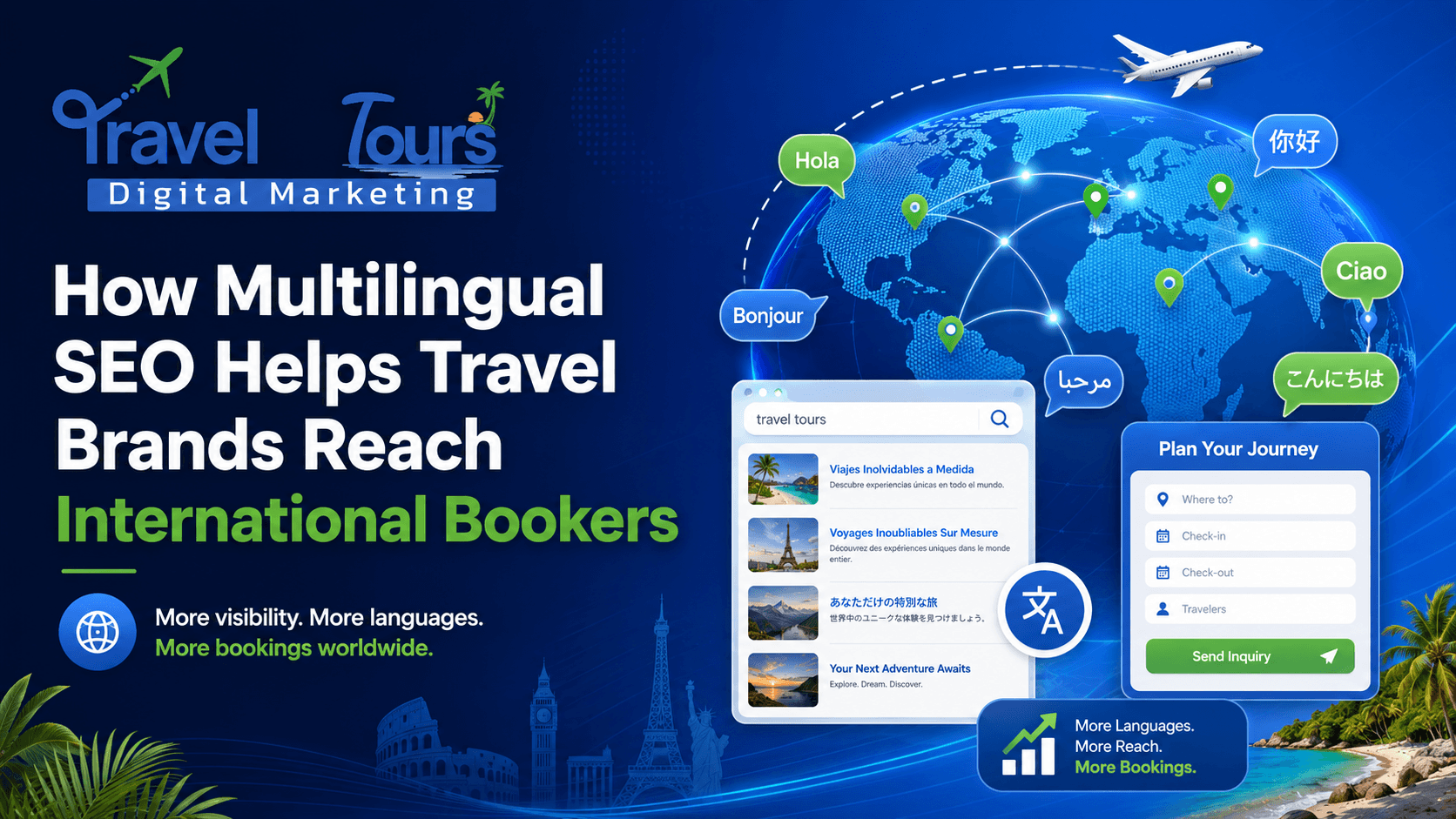
Travel planning often begins in a traveler’s preferred language. People search for destinations, compare tours, review policies, and evaluate booking details using familiar terms. A travel brand that appears clearly in those searches can earn attention early in the decision process.
Multilingual SEO for travel and tour operators helps travel agencies, hotels, and experience providers build that visibility. It combines localized content, technical search signals, regional keyword research, and a booking journey that feels natural to each audience.
The goal is simple: help international travelers find the right page, understand the offer, and feel confident moving toward a reservation.
Why Multilingual Search Matters For Travel Brands
Travel searches carry strong local language patterns. Real travelers may use specific phrases when searching for tours, accommodations, transfers, or destination activities. Those phrases may differ significantly from direct English translations.
Travelers may also search by neighborhood, landmark, trip length, transportation method, or experience type. Their expectations around dates, currencies, schedules, and contact methods can differ.
Multilingual SEO gives each market a clearer path from search result to booking page. It also helps search engines understand which page belongs to each language and region.
Choose Markets With Clear Booking Potential
A strong multilingual strategy begins with market selection. Review existing traffic, inquiry records, booking data, customer locations, and sales conversations. These signals can reveal countries or language groups already showing interest.
Focus the first rollout on a manageable group of markets. This gives the team time to research language, build useful pages, review technical details, and maintain content after launch.
Questions To Guide Market Selection
- Which countries already send qualified website traffic?
- Which languages appear in inquiries and booking messages?
- Which destinations attract strong international interest?
- Which markets fit current schedules, pricing, and capacity?
- Which language pages can the team maintain accurately?
A market with existing demand often provides a practical starting point. Search data from localized paid advertising campaigns can also reveal which countries, languages, and tour offers attract meaningful interest.
Research Keywords Within Each Language
Keyword research should happen inside the target language. Search terms rarely match word for word across markets. Travelers may use local expressions, abbreviations, destination nicknames, and culturally familiar descriptions.
Research should cover broad discovery terms and high-intent booking phrases. Include searches connected to location, duration, group type, transportation, inclusions, availability, and price.
One audience may search for a “guided city tour,” and another may use a phrase closer to “city visit with local guide.” Both expressions point toward the same service and require separate research.
Build A Dedicated Page For Each Market
Each language version needs a stable, indexable URL. Dedicated pages give search engines and travelers a clear destination. They also make performance easier to track.
| Page Element | Purpose | Localization Focus |
|---|---|---|
| Page Title | Signals Topic And Location | Natural Search Phrase |
| Main Heading | Confirms The Offer | Familiar Local Wording |
| Tour Description | Explains The Experience | Relevant Details And Tone |
| Pricing Section | Supports Planning | Currency And Fee Clarity |
| Booking Form | Captures The Inquiry | Local Labels And Formats |
| FAQ Section | Reduces Uncertainty | Market-Specific Questions |
Language pages should include the information needed to evaluate the offer. Thin pages with a few translated lines rarely provide enough value for search visibility or booking confidence.
Include Details International Travelers Need
- Tour meeting points and transportation guidance
- Language availability for guides
- Payment methods and deposit policies
- Cancellation and weather information
- Accessibility details
- Group size and age requirements
- Time zone and support information
Clear information reduces friction during trip planning.
Localize Language For Real Search Behavior
Effective localization reflects how people speak, search, and make travel decisions. A skilled native-language writer can preserve the brand voice and adapt the message to the market.
Market priorities may include detailed planning information, convenience, cultural access, family suitability, or private service. The page should emphasize the details that carry meaning for its intended audience.
Calls to action also deserve local review. A phrase that sounds natural in English may feel awkward after direct translation. Local phrasing can make the booking step feel familiar.
Use Hreflang And Clear URL Structure
Hreflang tags help search engines connect equivalent pages created for different languages or regions. They indicate the intended audience for each version and reduce confusion when several pages cover the same service.
A clear URL structure also supports management. Common formats include language folders such as /es/, /fr/, or /de/. Regional versions may use /en-us/ or /en-gb/ when content differs by country.
Each page should use accurate metadata, translated headings, and internal links pointing to the correct language version. Language selectors should be easy to find on mobile and desktop screens.
Strong travel website design also helps visitors switch languages, navigate destination pages, compare tours, and reach the booking process without unnecessary steps.
Keep The Booking Experience Fully Localized
The booking process should continue in the selected language. A localized landing page followed by an untranslated form can interrupt trust and create confusion.
Translate form labels, confirmation messages, payment instructions, automated messages, and cancellation details. Use familiar date formats, phone formats, and address fields. Display pricing clearly and explain currency terms that may affect the traveler.
Localized email marketing can continue the experience through inquiry replies, reservation confirmations, payment reminders, packing information, and pre-trip instructions.
State the languages available for live assistance, email support, or scheduled calls.
Publish Content Around Travel Planning Needs
Destination guides can support multilingual service pages and reach travelers earlier in the planning process. Useful topics include seasonal weather, neighborhood comparisons, transportation instructions, cultural etiquette, packing guidance, and sample itineraries.
Connect each guide to a related tour or booking page through natural internal links. This creates a stronger topic structure and helps readers move from research to action.
Localized social media marketing can extend the reach of these guides through destination tips, short videos, traveler questions, itinerary highlights, and market-specific promotions.
Review seasonal information, opening hours, entry rules, prices, and transportation details regularly.
Measure Results By Market
Track each language version separately. Total traffic gives limited insight when several regions are involved.
Useful measures include:
- Organic visits by country and language
- Search impressions for localized terms
- Booking form starts and completions
- Qualified inquiries by market
- Revenue connected to each language group
- Cancellations and support requests
Review these results with feedback from sales and customer service teams. Questions from travelers can reveal missing information and new content opportunities.
Build A Multilingual SEO System Your Team Can Maintain
Multilingual SEO works best as an ongoing operating system. Assign ownership for translation review, technical checks, content updates, and performance reporting. Keep a record of approved terminology for destinations, services, policies, and calls to action.
Begin with one or two promising markets. Build complete pages, connect the technical signals, localize the booking journey, and monitor inquiry quality. Expand after the team has a repeatable process.
A thoughtful multilingual SEO strategy helps travel brands meet international bookers in the language they use to plan. It creates clearer search visibility, stronger trust, and a smoother route from early research to a confirmed reservation.