Travelers ask a lot of questions before they book. Some are simple. Some are emotional. Some come from excitement, and others come from fear of making the wrong choice.
For travel brands, those questions are more than customer service details. They are search signals, trust signals, and booking signals.
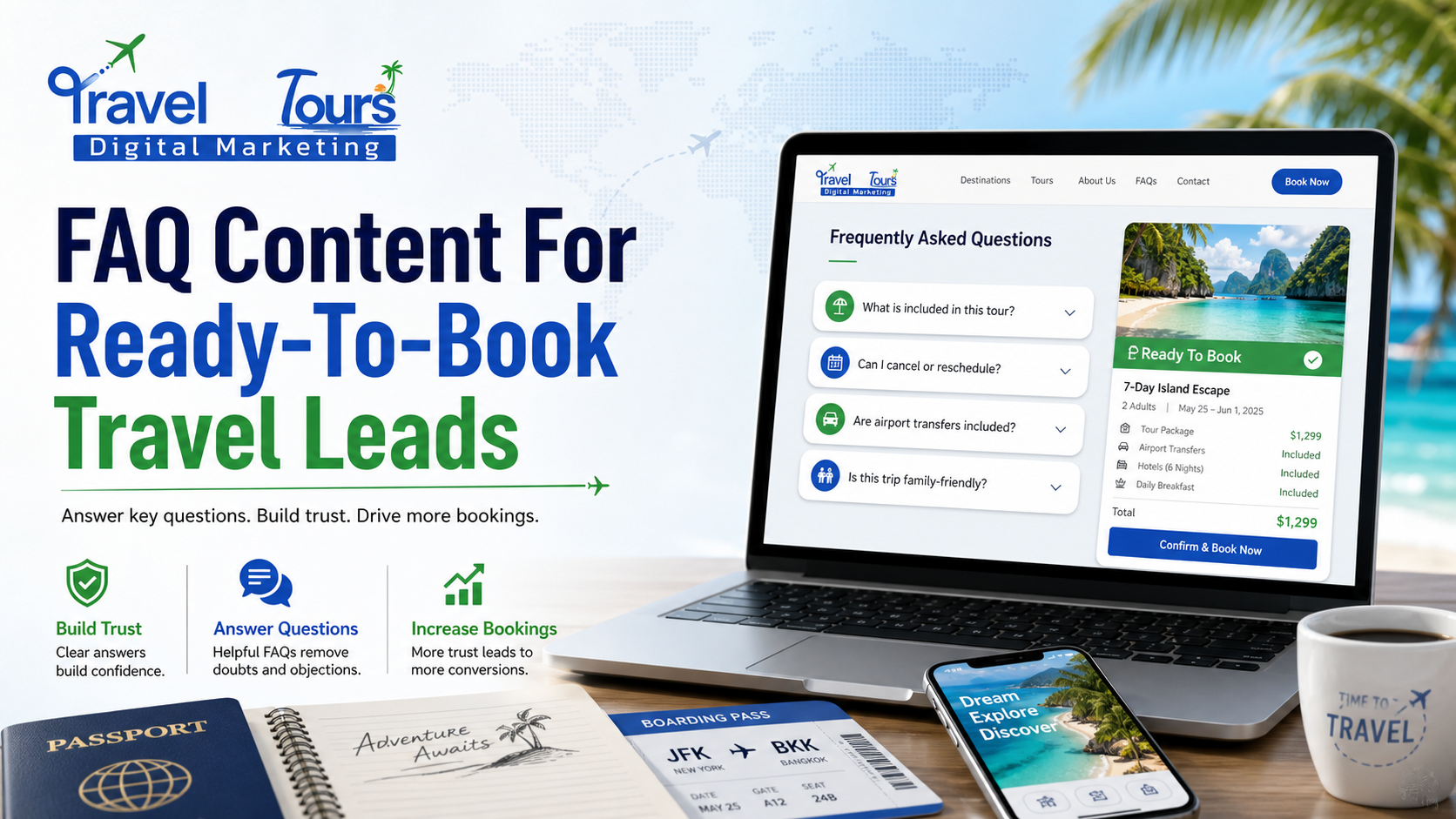
FAQ content helps travel agencies, tour operators, resorts, guides, and destination brands meet people at the exact moment they are comparing choices. When someone searches for cancellation terms, trip length, group size, what to pack, transportation details, or safety rules, they may be close to booking. They need one last layer of confidence.
That is where strong FAQ content can help.
Why FAQ Content Matters For Travel SEO
Travel decisions often involve money, time off work, family schedules, flights, weather, safety, and personal expectations. A traveler may love the idea of a trip and still hesitate if important details feel unclear.
FAQ content gives those details a home.
A strong FAQ page can help answer high-intent searches such as:
- What is included in a guided food tour?
- How far in advance should I book a private tour?
- Are travel deposits refundable?
- What should I pack for a day tour?
- Do airport transfers come with the package?
- Can this trip work for families with children?
These questions may look small, yet they often sit close to the booking decision. The more clearly a travel brand answers them, the easier it becomes for a visitor to feel ready.
How FAQ Content Supports The Booking Journey
People rarely book travel after seeing one page. They move through research, comparison, planning, reassurance, and purchase. FAQ content can support each step.
| Traveler Question Type | What The Traveler Needs | Helpful FAQ Content |
|---|---|---|
| Price Questions | Cost clarity | Deposit, payment, refund, and included-item answers |
| Itinerary Questions | Trip expectations | Schedule, stops, timing, and activity details |
| Safety Questions | Confidence | Guide credentials, age limits, terrain, and health notes |
| Logistics Questions | Planning help | Pickup points, transportation, parking, and arrival times |
| Fit Questions | Personal relevance | Group size, family suitability, accessibility, and pace |
| Policy Questions | Risk reduction | Cancellation, rescheduling, weather, and change terms |
This structure helps turn scattered concerns into content that feels organized and useful.
Where Travel Brands Should Place FAQ Content
FAQ content can live in more than one place. A single large FAQ page may help general visitors, yet trip-specific questions often perform better when placed near the booking decision.
Tour And Package Pages
Each tour or travel package should include questions tied to that specific offer. A snorkeling tour may need answers about swimming ability, gear, weather, and marine life. A food tour may need answers about allergies, walking distance, and group size.
These answers help the visitor stay on the page instead of leaving to search elsewhere.
Destination Pages
Destination pages can answer questions about seasons, local transportation, safety, travel time, family activities, and popular attractions. This type of content works well for organic search because travelers often research destinations before choosing a provider.
Booking Pages
Booking pages should answer last-minute concerns. Keep answers short and focused here. People near the checkout stage need clarity, not a long research article.
Good topics include:
- Payment options
- Deposit rules
- Cancellation terms
- Arrival instructions
- Confirmation emails
- Rescheduling steps
Blog Posts And Guides
Some questions need more depth. A blog post may work better for topics like best travel seasons, itinerary planning, sustainable travel choices, or how to prepare for a first guided tour.
How To Find The Right FAQ Questions
The best FAQ content usually comes from real customer behavior. Your team already hears the questions that matter most.
Start With Sales And Support Conversations
Look through emails, chat logs, call notes, contact forms, and booking inquiries. Pay attention to repeated wording. Travelers often ask the same question in slightly different ways.
Examples may include:
- “Is this good for beginners?”
- “How much walking is involved?”
- “What happens if it rains?”
- “Can I bring my child?”
- “Is transportation included?”
- “How flexible is the schedule?”
If people ask a question before booking, it belongs somewhere on the website.
Review Search Data
Search Console, site search, ad search terms, and SEO tools can show what travelers already look for. Focus on questions with clear travel intent and real business value.
A question with fewer searches can still be valuable if it attracts people who are ready to book.
Study Reviews And Competitor Pages
Reviews reveal what guests cared about after the trip. They may mention friendly guides, smooth pickup, clear communication, safety, or flexible planning. Turn these themes into helpful FAQ answers.
Competitor pages can also show common topics in the market. Use them for research, then write answers based on your own process, policies, and brand voice.
How To Write FAQ Answers That Build Trust
FAQ answers should be clear, specific, and easy to scan. Travelers do not want vague promises when they are trying to plan a real trip.
Keep Each Answer Focused
Answer the question directly in the first sentence. Add useful detail after that if needed.
Example
Question: What Happens If The Weather Is Bad?
Answer: If weather affects safety or trip quality, our team will contact guests with next steps. Depending on the conditions, we may reschedule the tour, adjust the route, or explain available cancellation options.
This answer feels more helpful than a generic line about weather policies.
Use Plain Language
Travelers may be excited, rushed, or comparing several tabs. Simple language helps them understand the answer quickly.
Avoid internal terms that only your staff uses. Write the way a helpful team member would explain it over the phone.
Add Details That Reduce Anxiety
Strong FAQ answers often include small, practical details:
- Where to meet
- What to bring
- How long to expect
- Who to contact
- What happens next
- What is included
- What is not included
These details help travelers picture the experience before they commit.
FAQ Content And Schema Markup
FAQ content can also support structured data when used properly. Schema markup helps search engines understand page content. For travel brands, this can strengthen the relationship between page topics, questions, and answers.
Use schema for real questions and real answers that appear on the page. Keep it accurate. Do not mark up content that visitors cannot see.
Structured content works best when the page itself is already useful, organized, and written for travelers first.
Common FAQ Content Mistakes
Some FAQ sections fail because they feel like an afterthought. A few generic questions at the bottom of a page will not solve real booking concerns.
Common mistakes include:
- Giving vague answers
- Hiding important policies
- Using the same FAQ list on every page
- Ignoring trip-specific concerns
- Writing answers that sound too formal
- Forgetting mobile readability
- Leaving outdated policy details online
- Failing to connect answers to booking actions
FAQ content should feel current and accurate. If policies change, update the answers quickly.
How To Turn FAQ Content Into More Bookings
FAQ content works best when it connects naturally to the next step. After answering a question, guide the reader toward action when the moment feels right.
For example, after answering what is included in a tour, link back to the package details. After explaining private tour availability, invite visitors to request dates. After covering safety details, lead them back to booking with more confidence.
Helpful CTA Ideas
- Check Available Dates
- View This Tour
- Request A Custom Trip
- Start Planning Your Visit
- Contact Our Travel Team
- Book Your Spot
The call to action should match the question and the stage of the traveler’s decision.
Final Thoughts
FAQ content can do more than fill space on a travel website. It can capture ready-to-book searches, answer real concerns, support SEO, and make the booking process feel easier.
Travelers want to feel informed before they commit. When your website answers their questions clearly, it builds trust at the exact moment they need it.
For travel brands, that trust can turn research into action.